Showing posts with label twitter. Show all posts

Tuesday, November 13, 2012

Tracking Your Impact on Twitter

One of the themes of #solo12impact was that the first step in understanding the impact that your online or social media engagement has, is to track your number of followers and other simple metrics of engagement (retweets etc). I would argue the sooner you start tracking the better, as you can observe trends, and you never know what will happen to change your online presence.

I found this session really interesting to introduce me to a bunch of Twitter tracking tools. I've experimented with a few before. I'm just going to mention all the ones I know about in this post.

One I've used for a while now is "Twitter Counter". The free version of this tracks the number of tweets you make and the number of followers you have. You have to upgrade (pay) to export this, or see mentions/retweets, or to track back longer than 6 months. One thing I like is the ability to plot trends over long periods, and plot both number of tweets and number of followers on the same graph. I see interesting patterns in that. For example this screen shot from Jan-April 2012 shows the rise in followers I got from tweeting at the UK National Astronomy meeting in early April 2012, and also a boost from tweeting a lot during Stargazing LIVE (Jan 2012). My theory that your number of followers is proportional to the amount of time you've been tweeting is also based on these graphs, which seem to me to have rather constant gradient over long periods... at least for my account.


My conclusion from this is that number of followers isn't everything when it comes to your Twitter impact - but that's probably fairly obvious. However I do think tracking these trends is a good idea.

Another one I stumbled on that I kind of like is Favstar.fm which tries to work out what are your best performing tweets. I find that sort of interesting - seems to be based just on number of retweets and "favourites". Some interesting results for me.

My best tweet so far surprised me:


I've also tried out Klout, mentions of which (from others) received at best mixed reaction in the room during this session. True - it's a bit over simplistic, but it's probably also the most recognisable of the results (beyond number of followers) - it's tagline has turned into "The standard for influence". However, I opted out of Klout a little while ago after reading this article sent to me by @eddedmondson: "Evil Social Networks". If you sign up, you also sign up all of your followers (without their permission). Lots of people disagree with their results too. To opt out of Klout you can visit this link. Peerindex was mentioned as similar to Klout, and doesn't have the same opposition (at least that I can find online), so may be a better option if you want a single number. I'm signing up for this as a write.

Probably the big winner of a recommendation from this session was CrowdBooster. I joined this service yesterday following the session and I've been impressed so far. It seems to do both the tracking of raw numbers, and the analysis of the most popular of your tweets in one location. I like the first plot showing the reach of tweets (basically the total number of followers of everyone who might have read your tweet based on who retweeted it). The statistics on influential followers and who retweets you the most also look useful.


The insights into the best time to tweet also look interesting. Seems I must have a lot of US followers - not much of a surprise given I worked in the US for some time, but I didn't join twitter until after I moved back to the UK.... It's a bit annoying that my best time to Tweet is when I find it hardest to do so (7pm - during dinner time with the kids), but then maybe that's not a coincidence. I probably only tweet really important things then.....


The other shout out went to TwentyFeet.com as an alternative or complement to CrowdBooster. The downside of this being it auto tweets your results (which can annoy followers). I'm signing up for this as I write! 

SocialBro.com also got a (twitter) mention. This is a paid service (with a 15 day free trial). It may well be true that you get what you pay for, but I haven't tried this one yet.

I suspect the answer at the moment as to which we should all be using is that there isn't a single best answer and that it will change with time. However it also seems to me that you need a baseline for anything to be any much use, so signing up to at least something (or all?) of these now may be a good idea. 


Attending Solo12

I spent yesterday at SpotOn (Formerly Science Online) London. My justification for going was to learn more about tracking the impact of online public engagement. I had a really interesting day, and came away with a bunch of ideas.

The sessions I attended were:

Raising the Profile of Women in Science Online and Offline (actually on Sunday) #solo12wis

Then on Monday:

Using Twitter for Science Communication (which turned into a workshop on the idea of using Twitter characters to improve engagement). Storify of this session. #solo12twitter

Using Social Media at Conferences and Other Events. Storify of this session.  #solo12

Tracking the Impact of your Online Presence. Blog post taster. #solo12impact. I'm going to blog some thoughts from this session next.

And How to Evaluate your Online Engagement. #solo12eval

Friday, October 19, 2012

Wednesday, July 25, 2012

Wishing on stars.... with accurate science

There's a meme which keeps going round Twitter (and this morning appeared in my Facebook) stream which says:


We apart from being depressing, it's not actually true. And I am finally decided today to write why not.

All of the stars we see in our night sky are part of our own Galaxy - the Milky Way.

This is how the night sky looks from a really dark site (in a beautiful image taken by Stephane Vetter which appears on APOD). We live inside our galaxy, so we see stars in it in all directions, and along the disc of the galaxy (which is shaped a bit like two fried eggs held back to back) we see lots of stars all close together on the sky.


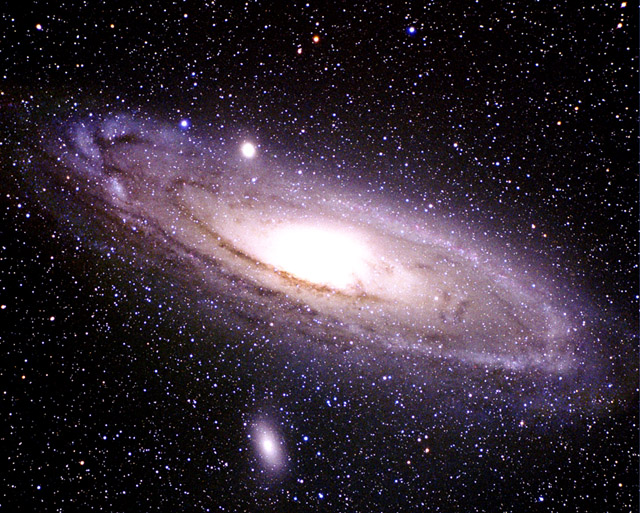
This is a picture of a nearby galaxy - the Andromeda galaxy, which has a similar structure to what we think the Milky Way would look like from the outside (also from APOD)


Andromeda Galaxy: Credit & Copyright: Jason Ware

We can measure distances to stars and other structures in our galaxy, so we know to a good level of confidence that it's about 100-200 thousand light years across. So every star we see in the night sky is closer than 200 thousand light years away. That means the light from them travelled for 200 thousand years or less to reach your eye.

 In fact most bright stars in the night sky are much closer than that. Most of the stars we see in the sky are within a 1000 light years (e.g. this list of the brightest 26 stars in the night sky), so the light from them has taken less than a 1000 years to reach your eye.

So if the star you wish on is a bright one in the sky (at a guess I'm going to say it is), that means it's probably within 1000 light years from us. So the light from it has been travelling for 1000 years to reach your eye. That's a long time, but it's not a million years, and it means that it's unlikely that that star is already dead.

 Most stars live for billions of years - only the very biggest live for shorter - but even that is a million years.

 The things which are millions of light years away, and in which the stars likely are already dead are all the other galaxies in the Universe. However the most distant one you can see with your own eye is the Andromeda galaxy (check out that faint blob below the Milky Way to the right of the all sky picture above - that's Andromeda; or see me point it out in this video). Andromeda is far away - about 2.5 million light years away, but even at that distance most of the stars you see whose light has taken 2.5 million years to reach your eye will still be alive.

Basically what I hope I've convinced you is that unless you're dreaming on stars in galaxies so faint you can't see them with your own eye, the statement above just isn't true.

So keep dreaming. That star most likely isn't dead already, and your dreams don't need to be either. After all I got to become a professional astronomer and have two beautiful kids as well.

Tuesday, July 24, 2012

Twitter Recommendations for Astronomy Researchers (from DotAstronomy)

At the recent dotastronomy, @drphilmarhsall and myself ran an unconference session with the aim of collecting the wisdom of dotastronomy attendees on the reasons we like Twitter (all but 3 of the attendees were signed up), why we think it's useful to our research careers and as a tool for communicating about our science.

What follows are the notes I took during that session under various categories.

Twitter 101

Twitter signup now easy and guided to find your interests.
Predictive follow suggestions will be made when you sign up. 

I have an account now what?

(Specifically for people who signed up a while ago but have never done anything with it).

Some of us use tweetdeck to filter - others don’t

Some people follow everyone
Some people follow only selected/few
It’s OK to follow/unfollow as suits your wishes

A lot of us use Twitter for work only (Facebook for friends)

Who you follow depends on your interests

Follow people you know on Twitter and the people they are following

Try things
Go at your own pace

Use conference hashtags #AAS #NAM #dotastro! To find people. 
Search on “astro” in the username to get started

Best Practices for Tweeting

Talk to people (interact)
Don’t just tweet for the sake of it…. Tweet interesting things
Guidelines for tweeting at conferences exist
Tweet things you are happy anyone reading
The press (might) read these, so tweet only things you are happy anyone reading.

I'm too Busy For Twitter

Don’t be frightened/worried
you don’t have to read everything
You don’t have to tweet every day

Using Twitter to Help in Your Research

It's a great tool for self promotion (amongst other Twitter users)
Tweet your papers
You may hearing about jobs early and/or jobs you wouldn't find otherwise
It's good for general networking – drops barrier for networking at conferences (e.g. Tweetups)

BUT – everyone could be reading what you tweet, so only tweet things you are happy anyone (research competitors?) reading.

Ideas for Tweeting about/for Research

Taking notes at seminars/meetings (you can tweet to Evernote as your note taking method)
Boiling topics down to most important 140 characters will help you understand the subject

You will be on top of breaking news in your field (telescopes, funding, politics etc)

You can find quick answers for things…. - the lazy web

Using Twitter to Communicate with the Public

When you have that conversation on the train that starts "Did you hear about….?" – now the answer is more likely to be yes, as you will be on top of trending topics in astronomy.

Conversation will be important here to actually do outreach - you want your tweets retweeted widely to reach people who don't follow you (real outreach).

Join in with popular tags 
e.g. #bbcstargazing on the night of the show was fantastic

The Demographic on Twitter

Probably narrow group of followers for many researchers - so tweeting just to your followers may not be effective outreach. 

Need to get yourself retweeted (by Dara O’Briain etc.) to reach other audiences 

General consensus about retweeting social conduct - don’t ask to be retweeted (except rarely?)

Tweet on popular hashtags to reach wider audience. 

Tools for Tweeting

A lot of us use Tweetdeck, but there were some strong anti-tweetdeck sentiment in the room. 
Tweetdeck pros and cons
  • Not casual/feels like work
  • Processor hog
  • Can look overwhelming
  • Easy to filter
  • Easy to manage multiple accounts (e.g. a personal and a work one, and/or accounts for organizations).
An alternative: 
Twitter app in the corner of your screen - Not what you’re doing, it’s a sidebar

Tweeting using smart phones and/or tablets also popular for in talks etc. 

Tweeting for an Organization

Will be rules sometimes/usually.
Tweet responsibly - tweet things you are happy anyone reading.
Have your own personal account as well. 

What do we want/get out of Twitter?

Community
Education/knowledge
Stumbling on interesting things
Socially filtered information (instead of RSS?)
Get people to read your blog/website
Virtual office chatter

Convincing People to Tweet

We get things out of it
Any evidence for the benefit of the use of twitter? - Conclusion was nothing convincing, but we keep looking. 


Also since the meeting, we found links to two interesting articles in the Journal for Communication of Astronomy with the Public about the use of Twitter: 


Tweeting Space Craft: Communicating Space Science in the Age of Web 2.0, by Janet Vertesi (Princeton University) in 2010.


and 


Live Casting: Bringing Astronomy to the Masses in Real Time, by Pamela Gay, Phil Plait, Jordan Raddick, Fraiser Cain and Emily Lakdawalla in 2006. 


Tweets from WinSciFest Talk

I gave a talk on Galaxy Zoo at the Winchester Science Festival last weekend. I think it's the first public talk I've had live tweeted, so I thought it would be interested to record that all here.


 Thanks for all the nice comments, and an interesting record of my talk for me. :)


Monday, July 23, 2012

My DotAstronomy4


Its been well over a week since I got back from dotastronomy 4, and the time has really flown by (both at the conference and since). This blog post is mostly a collection of links and reminders for myself about what I did at dotastronomy. If you also find it interesting that's great, but it is not a comprehensive review of dotastronomy so if you want that go somewhere else. 

Other people at the conference have written blog articles about their experiences (Sarah Kendrew, Astronomyblogger, OrbitingFrog, Astropixie).

In years to come I suspect what I will remember most about dotastronomy is the journey up to the Haus de Astronomie on the furnicular railway.

The second of the two trains. 

View down the track from near the top.

I enjoyed this blurry effect as we travelled through a tunnel.

We all had to remember (and exert willpower) to not "get off at the Schloss" (beautiful castle overlooking Heidelberg). 

The food was also interesting - I didn't realise there was so much meat in German food! ;) I enjoyed the visual presentation of this desert. 


 The theme of my dotastronomy this year seems to have been learning about visualisation techniques. I particularly enjoyed Noah and Julie's talk on the subject and I was annoyed to be in a different unconference session and missed their workshop. I'm planning to put more thought into the visualisations in future papers, and especially in the public talks I use. 

For my hack day I joined the project initiated by Sarah Kendrew with the idea of making visualisations of links between terms in astronomical papers. There is a website called Brainscanr which does this for medical research, and Sarah thought it could be interesting in astronomy too. Orbitingfrog also got involved, developing the tools to download the text from the arxiv, strip it of non-astronomical terms, and properly deal with plurals etc. What I did was work out ways to visualise this. I worked with Gephi to make network diagrams of the results. Using an input .cvs file with one paper per line, and each term in each (abstract of) each paper on that line, this tool can make a network diagram like this one which shows links between terms in abstracts which contain the words "dark energy". 


I also learned about using the Javascript tools at Rickshaw to make plots live in the browser. Finally I messed around with wordls which are always fun (if of dubious use). 

The results of our hack are online here. 

While I was doing this I also learned about Culturomics which lets you make plots of the frequency of any terms you like in arxiv papers. Useful. :) 

I also participated in Amanda Bauer (astropixie)'s project to make a "Science it's a Universal Thing" video (in reponse to the "Science it's a Girl Thing" debacle).


I love the video Amanda and Nicole made, and although I'm not sure it would be ideal to interest teenagers in science, it is well deserving of it's "Best Reminder of Why We Got into this in the First Place" hack day prize. 

I was an extra in "S**t Astronomers" say too - with some stupid questions in the "talk" that was a fun few minutes!


On the last day Phil Marshall and I ran an unconference session aimed at collating the collective wisdom at dotastronomy on the most effective ways for researchers to use Twitter (both to enhance their research/networking, and for science communication). This has been done before (e.g Pamela Gay et al. as part of Live Casting: Bringing Astronomy to the Masses in Real Time in 2008, and by Janet Vertesi in Tweeting Spacecraft in 2010) but we are still thinking about plan to write up our updated collective recommendations. 

Kelle Cruz's talk on changing the culture of professional astronomy has also really stuck in my mind. I'm not sure it's possible, but it's a lovely idea, and I often wish inparticular that junior scientists could be less stressed out. We all too often focus on job insecurity instead of our love of the work itself, and it was nice to have a reminder of the fruitlessness of that. I was also reminded of the tools and tips on the Astrobetter blog, which are an absolutely fantastic resource. 

Throughout the conference I pushed a wiki to collect recommendations and links from the dotastro community - which is filling up well. I also ran on there a survey of equipment and programming tools favoured by the group, which I presented to the conference using Prezi (one of the recommendations which I had not tried before). Following that I'd recommend running surveys with a Google Form (in Google Documents).

I have vague plans to collate the recommendations and links a bit better (and perhaps submit to the Astrobetter blog), and there are also other plans to document this years dotAstronomy (and the 3 that proceeded it) a bit better, so stay tuned on that.

Dotastronomy is a great conference, and a completely unique experience. As was the case last year in Oxford, I've returned home enthused and inspired and ready to get to work (a good thing given my last week!). For me dotastronomy is a chance to update my arsenal of skills, but more importantly to reconnect with the excitement of doing and communicating astronomy with a like minded group of people. 

Monday, July 9, 2012

My dotastro Twitter Visualisations

On archivist: dotastro

Graph of people recently tweeting dotastro (not sure this is working).

Also will update with the last one (downloading and using TAGSexplorer when/if I get it working).

Instructions for doing all this: Fun with Twitter Visualizations.

Wednesday, June 6, 2012

My Transit "Expedition"

Given how much time I've spent lately trying to interest others in the transit of Venus, I got pretty excited myself, so I couldn't resist a trip out to Langstone Harbour on the East coast of Portsea Island to try to get a view. I was tempted out of the house by some tantalising gaps in the cloud on the sunrise horizon.

This great tool which shows the direction and altitude of the Sun's path during a day can show you where I was. Sunrise of course to the North East this close to the Solstice (only due East on the Equinoxes).


Unfortunately it stayed cloudy most of the time. I got a glimpse of the part of the Sun on which Venus was transiting (through my safety glasses), but not long enough to spot the small disk of Venus. Below is a storify of my transit of Venus 2012 experience, including some pictures I took of the clouds! ;)


Saturday, April 28, 2012

Science Magazines are a "Men's Interest"

Last weekend I was out shopping with my daughter, who loves looking at the children's magazines. So we paused for a while in the magazine section of our local Tesco Express, and I noticed this:


This annoyed me.... so I tweeted it, and to my surprise this is what happened (as a Storify story):

I never expected to get so much response from an off the cuff tweet.

 I'm still waiting to hear back further from Tesco. I was in the same shop on Tuesday afternoon and nothing had changed.

Wondering how widespread this is (in Tesco or other stores). Can we collect evidence of it happening elsewhere?

I'll continue to update.

Thursday, April 19, 2012

Beautiful Galaxy M61

One of my favourite hashtags on Twitter is #bbcstargazing. During the programme I followed this to answer astronomy questions sent to it. Something I enjoyed the challenge of in 140 characters, and would love to continue if you tweet questions tagged #askastronomy.

Now the  #bbcstargazing hashtag is mostly astrophotographers posting their latest image. This morning the image being retweeted (RT) is this one of M61 taken by Daniel Marlow (@drm3107).

M61. Credit: Daniel Marlow
So it seemed like a good time for the next beautiful galaxy post - this one about M61.

Messier 61, is a bright spiral galaxy in the Southern extremity of the Virgo Cluster (our nearest large cluster of galaxies). It's notable astrophysically for having had 6 supernova observed in it, which apparently ties it with M83 as the Messier galaxy with the most observed supernova, but none of the supernova in M61 have been of the Type1a used to measure cosmological distances.

And the distance to M61 is a bit tricky to estimate. Being near the Virgo cluster whose large mass distorts the usual relationship between recessional velocity and distance you can't really just use the redshift of M61 to give it's distance, and other distance measurements listed in NED for M61 range from about 30 million - 90 million light years (10.1-35.5 Mpc). If it's at the distance of the centre of Virgo it's probably about 50 million light years away (16 Mpc).

Assuming that distance the size of M61 is quite similar to the Milky Way, and so is it's morphology. It's historical classification lists it as a weakly barred Sbc galaxy. It also host an actively accreting black hole in its centre.

Here is the Sloan Digital Sky Survey image of it:

M61: Credit SDSS
Another beautiful galaxy.

Links: LookUP on M61; SEDS on M61; NASA Extragalactic Database on M61; Wikipedia on M61.

Friday, April 13, 2012

1000 Followers on Twitter!

Today I get to welcome my 1000th follower on Twitter which is pretty exciting to me.


Until some spam bots unfollow me and I dip below 1000 again, my 1000th follow is @peterdedmonds (who according to his Twitter profile works in publicity for the NASA Chandra satellite). Hello Peter. :)

I try to keep the tweets interesting and generally about astronomy/academic science. :)

 If you don't already you can follow me at this link: @KarenLMasters

 And here's a live update of the above screenshot from Twittercounter.com


Monday, April 2, 2012

Fun with Twitter Visualizations for NAM2012

I seem to be becoming an advocate of the use of Twitter for researchers (more on that after this year's dotAstro). So it might surprise you to learn I was a massive skeptic at first and only signed up under protest! ;) But the more time I spend on Twitter the more I appreciate the tool it provides to connect people (which in my case are generally astronomers).

 Anyway, one of the fun things about Twitter is the archive/visualizations you can make of a given search term. I did some of this with tweets from the UK National Astronomy Meeting in Manchester last week, which were tweeted with the hashtag #NAM2012.

 By it's nature Twitter is transitory, so some of these visualizations won't last - for example the Graph of People Recently Tweeting #NAM2012 will be blank soon, but you can visit the link and put in the search term of your choosing.

This archive will remain, but I set it up late, so it only represents the last couple of days of NAM - and note to self, to set up such archives early for the next meeting. This service can only collect the last 500 tweets of a hashtag.

(And I should do a shoutout to Doug_Burke, a British astronomer at the Harvard-Smithsonian Centre for Astrophysics for sending me the links to these services which he has previously used to collect AAS tweets).

Because of that limitation I was tempted to get a bit more technical and tried downloading all Tweets with #NAM2012 before they disappeared. Thanks to dotastro I am confident/crazy enough to give this a go. I Googled for help, and found these instructions: Twitter: How to archive event hashtags and create an interactive visualization of the conversation which I followed to set up a Google spreadsheet collecting #NAM2012 tweets. This could get the last 1500 (which is Twitters limit, nothing to do with the code), which on Thursday meant tweets back to about Tuesday night at NAM (so not all, but most of them). I then set it up to display them in a NAM2012 visualization at TAGSexplorer. I think this will keep updating until I turn it off which I will do in a couple of days once all the NAM news stories are gone. 


 Hope you enjoy them. Try exploring the tweet timeline for a given users in the last one - hit play for a fun movie. :)

Wednesday, March 21, 2012

Beautiful Galaxy M101 in wide field

M101 is becoming one of my favourite galaxies - not least because the post I did about it when a Supernova was discovered in it last August is the 3rd most read here.

So I was pleased to notice on the Twitter #bbcstargazing stream a link to a beautiful wide field shot of the galaxy.


And here's the image in its full glory from the Flickr stream:
M101 Widefield - 190312
M101 Widefield by Mike Hyde on Flickr.

So why do I like this image so much.... well I was just talking about it with my office mate Chris and he put it well. You can see the galaxy, and you can tell it's a galaxy made of billions of stars and unimaginably immense on human scales, but you can also get a sense of how tiny this galaxy is compared to the Universe, and even how tiny it appears on the sky from Earth. Check out the other galaxies in the image - an edge on disc towards the bottom, and a fuzzy patch at the upper right. 

And Chris (who works on supernova projects) tells me the supernova in it is still quite bright. It's currently about 16th magnitude - even months after it went it. Now that's not quite visible in this image, but still giving useful information via even quite small professional telescopes. There's already been several papers based on it discussing distance measurements to M101 and the scale of the Universe. 

Great image. :)

Wednesday, February 8, 2012

And the winner is....

Thanks to everyone who responded to the question in my previous poll. Here's a collection of responses from Twitter.


So a pretty clear front runner in Image 3.


Has been duly submitted to the website, and I'll post a link when it appears (they say it may take a few days due to the popularity of the site).

Friday, October 14, 2011

Twitter Link Roundup for Oct 10-14th 2011

I don't like how Twitter forgets what I've said eventually. So I plan to try a semi-frequent round-up of my favourite Twitter links/Tweets from the week.

Here goes

Faster-Than-Light Neutrino Puzzle Claimed Solved by Special Relativity  (via )


Mathematician and mother - October 2011 - GetSET Women Blog - The UKRC: 


@telescoper: The Astronomy Career Problem - it starts with the PhD

(and related to this check out the astrojc for this week - on the problems with Scientific Careers)

@NtlSTEMCentre: Talking to pupils about  careers? Have you seen our collection of  videos which may help?

@cosmicpinot (which is Brian Schmidt): Adam Riess - on NPR playing a game after the Nobel Prize Announcement - 

What a great idea:  (via and)


And alarmingly: @NatureNews: Physicist languishes in French prison 

Friday, October 7, 2011

Ada Lovelace Day Links from Twitter

A great idea by @alicebell and @allinthegutter to make lists of women scientists to follow (as part of Ada Lovelace Day). 

Alice Bell's Ada list
Emma's List

Other great Ada Lovelace Themed links from Twitter


Free iPad Application "Lovelace and Babbage"

Friday, June 17, 2011

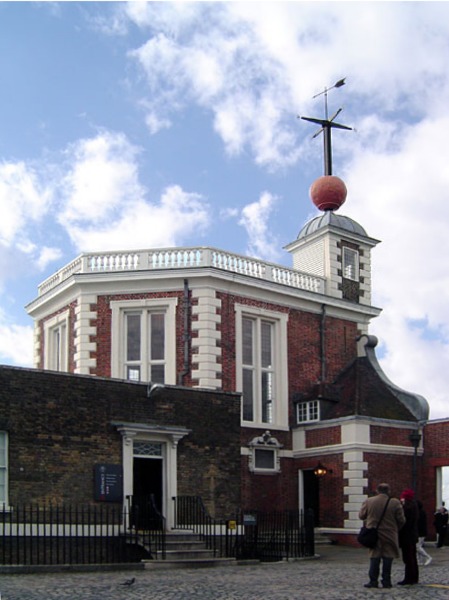
Guest Scientist at the Royal Greenwich Observatory


I had a great day yesterday, traveling to London to participate in the Royal Observatory, Greenwich's "Meet a Scientist" program.

I spoke about my work with the Galaxy Zoo project to two groups of around 25 gifted year 9 students (13 and 14 year olds who are already taking their GCSE in science).


I also (finally) got to see the "We are Astronomers" planetarium show (which is as good as I had heard!), as well as get a tour of the night sky presented by my fellow AstroTweeter "skyponderer".

And I got to take the boat along the Thames from Waterloo to Greenwich.

All in all a fun day in the life of an Astronomer. :)